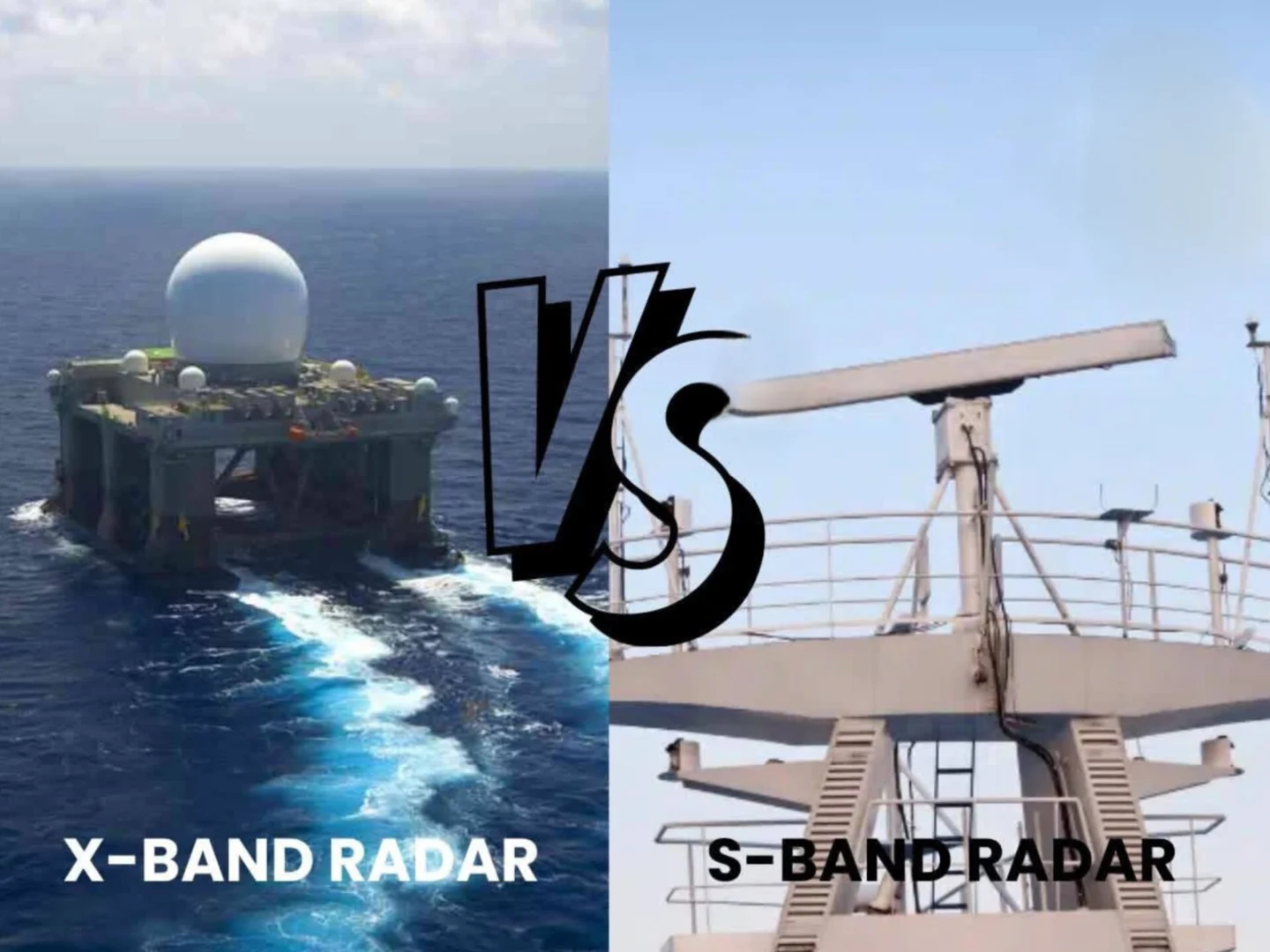
Have you ever wondered why big ships have two different radars? It’s all about purpose and performance! X-Band and S-Band radars work together to give mariners a complete picture of their surroundings. Here’s a quick look at the key differences between the two:
Decoding Radar: X-Band vs. S-Band
X-Band Radar
High Frequency, Short Wavelength: Perfect for high-resolution, close-range images.
Best For: Detecting small targets like buoys, ice, and small boats with incredible detail.
Downside: Its signals get easily scattered by heavy rain, fog, and snow, cluttering the screen and reducing its effectiveness in bad weather.
S-Band Radar
Lower Frequency, Longer Wavelength: Trades resolution for power and reach.
Best For: Cutting through bad weather to give a clear, long-range view. It’s the go-to for surveillance and spotting other ships from far away.
Learn more on Use of ECDIS
Downside: The image resolution is lower, so it’s not as good for picking out fine details or very small targets up close.
The Perfect Pairing
Many vessels are required to have both! The X-Band handles the high-detail, close-range view, while the S-Band provides reliable, all-weather, long-range detection. Together, they form a powerful navigational duo, ensuring safety no matter the conditions.
Got something useful to this marine insight? Share subscribe for more updates.